Encyclopedia vs index: why longer prompts don't fix AI
-
 Moe Hachem
 - March 9, 2026
Think about the difference between giving someone an encyclopedia and giving them an index.
It’s the same information, but with completely different usability.
If you’ve ever tried to improve your AI outputs by making prompts longer, you’ve run this experiment, even if you’re not aware. You give it more detail, more context, more examples, more constraints, you pour everything you’ve got into it - and sure, the output gets marginally better for a few turns, then the AI starts losing the thread again.
Why is that?
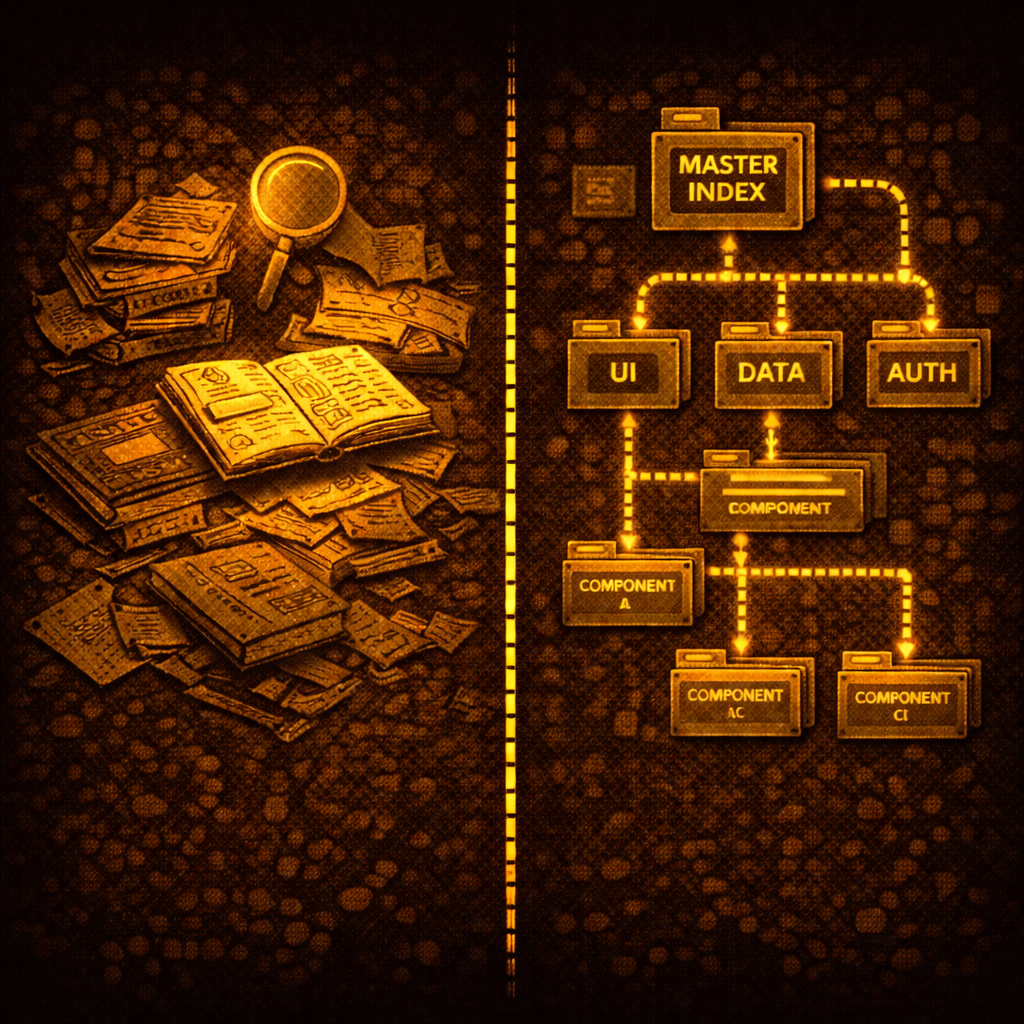
Think of it this way: the problem was never the amount of information. It was the structure.
An encyclopedia contains everything, but to make good use of it, you need to already know what you’re looking for.
An index solves the other problem: it helps you find what you need even when you only have a vague sense of where it lives.
The teams that get the most out of AI aren’t the ones that write the most detailed prompts. They’re the ones who’ve built the best information architecture behind the prompt.
They know what context the AI needs for each type of task. They’ve structured it so retrieval is fast and specific. They’ve created reusable patterns instead of one-off briefs.
This is what an AI integration workshop actually teaches. Not better prompting, but better information architecture.
The result is a team that can brief an AI the way a senior designer briefs a contractor — clearly, quickly, and without starting from scratch every time.
Curious what this looks like for your team? Workshop brief is available at the link.