I don't run AI training courses. I run AI orientation engagements.
-
 Moe Hachem
 - February 27, 2026

I don’t run AI training courses. I run AI orientation engagements.
The distinction matters more than it sounds.
An AI training course teaches your team how to use tools. Better prompting techniques. Useful shortcuts. Which model is best for which task. You leave with improved habits and a slightly better baseline.
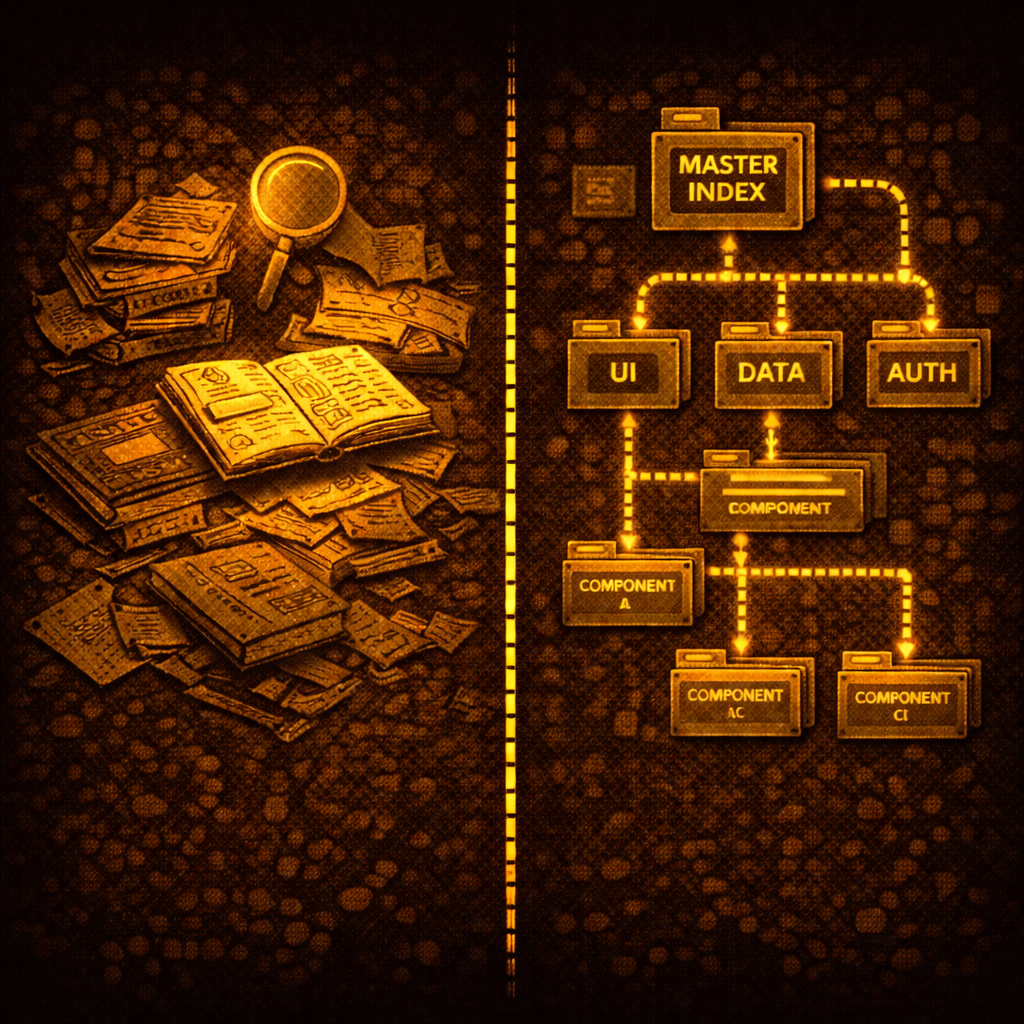
An AI orientation engagement redesigns the relationship between your team’s accumulated knowledge and what AI can actually reach. You leave with a working system — a knowledge map, a context index, a repeatable workflow — built around your specific operations, not hypothetical ones.
The outputs are not comparable.
Here’s what the difference looks like in practice.
A course covers general principles. An orientation engagement starts with a discovery session structured like a user research interview: what has your team tried with AI, what worked, what didn’t, where does your institutional knowledge actually live, what would success look like in 90 days. Nothing is prescribed. The discovery shapes everything that follows.
A course delivers the same content to every attendee. An orientation engagement includes a research and preparation phase between discovery and the workshop — studying how comparable teams in your industry are using AI, identifying patterns that map to your context, designing a session around your specific friction points.
A course ends when the session ends. An orientation engagement includes a follow-up session one to two weeks later to review what was implemented, address what emerged in practice, and validate that the approach is holding up in real conditions.
The methodology behind this is SR-SI — a framework for building orientation layers that make AI outputs genuinely relevant to a specific context. It’s not theoretical. It’s been applied across production codebases, consulting engagements, and product development cycles with documented results.
If your team is using AI and getting generic outputs, you don’t have a training problem. You have an orientation problem. Those require different solutions.
Learn more about the work shop here.
Discovery calls are the starting point - not a sales conversation, but rather, the beginning of the work.