Don't brief AI with history. Orient it with a map
-
 Moe Hachem
 - March 8, 2026

You don’t hand a new hire six months of meeting notes. You give them a map and help them find their way.
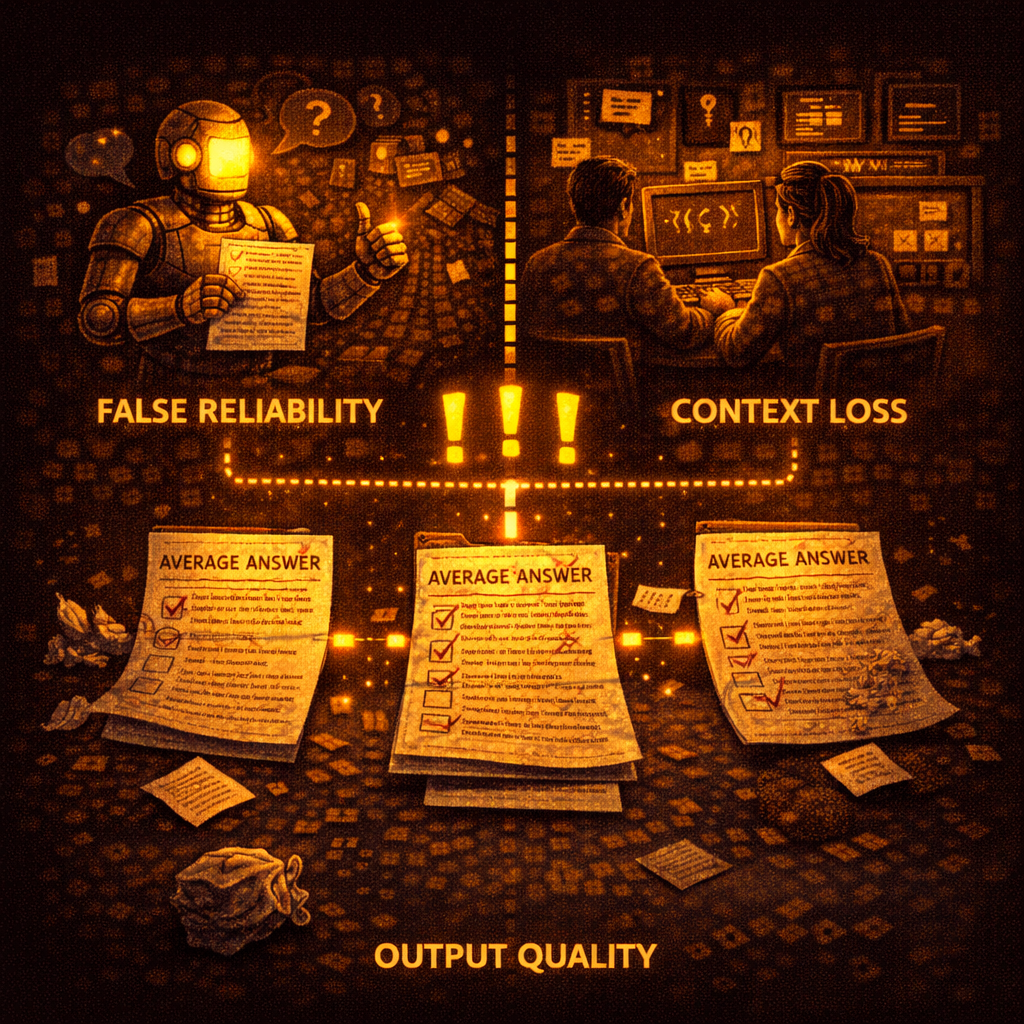
Yet, most people approach AI briefing the wrong way. They think the goal is comprehensiveness. Get everything in. All the context, all the history, all the decisions. Pack the prompt to the brim, and leave no detail out.
But that’s not how good onboarding works for humans, and it’s not how it works for AI.
When you bring someone new onto a team, you don’t make them read every Slack thread from the last quarter and all your product documents.
You orient them:
Here’s what we’re building.
Here’s why.
Here’s what matters most right now.
Here’s what we’ve tried that didn’t work.
An orientation is a structure that lets someone navigate from it.
My SR-SI methodology works the same way.
Instead of loading the AI with history, you build it a shallow index — a map of the territory. It’s high-level enough to provide orientation, structured enough to surface the right detail on demand.
The index doesn’t try to replace memory or expand context windows. It makes memory, or rather context windows, unnecessary. The AI doesn’t need perfect recall everything at once. It just needs to know where to look.
The difference between a useful AI collaborator and a confused one usually isn’t the model. It’s the briefing architecture.
Read the full methodology: SR-SI: The methodology that gives AI persistent memory across any long-running project