Builder mode vs architect mode in AI development
-
 Moe Hachem
 - February 20, 2026
I was formally trained as an architect. I can’t un-see systems now. Everything is interconnected, structural, a ripple effect away.
This is why most AI development workflows feel fundamentally wrong to me.
They’re optimized for builders.
But most of us in product aren’t building, we’re still discovering what to build.
Here’s the distinction that matters:
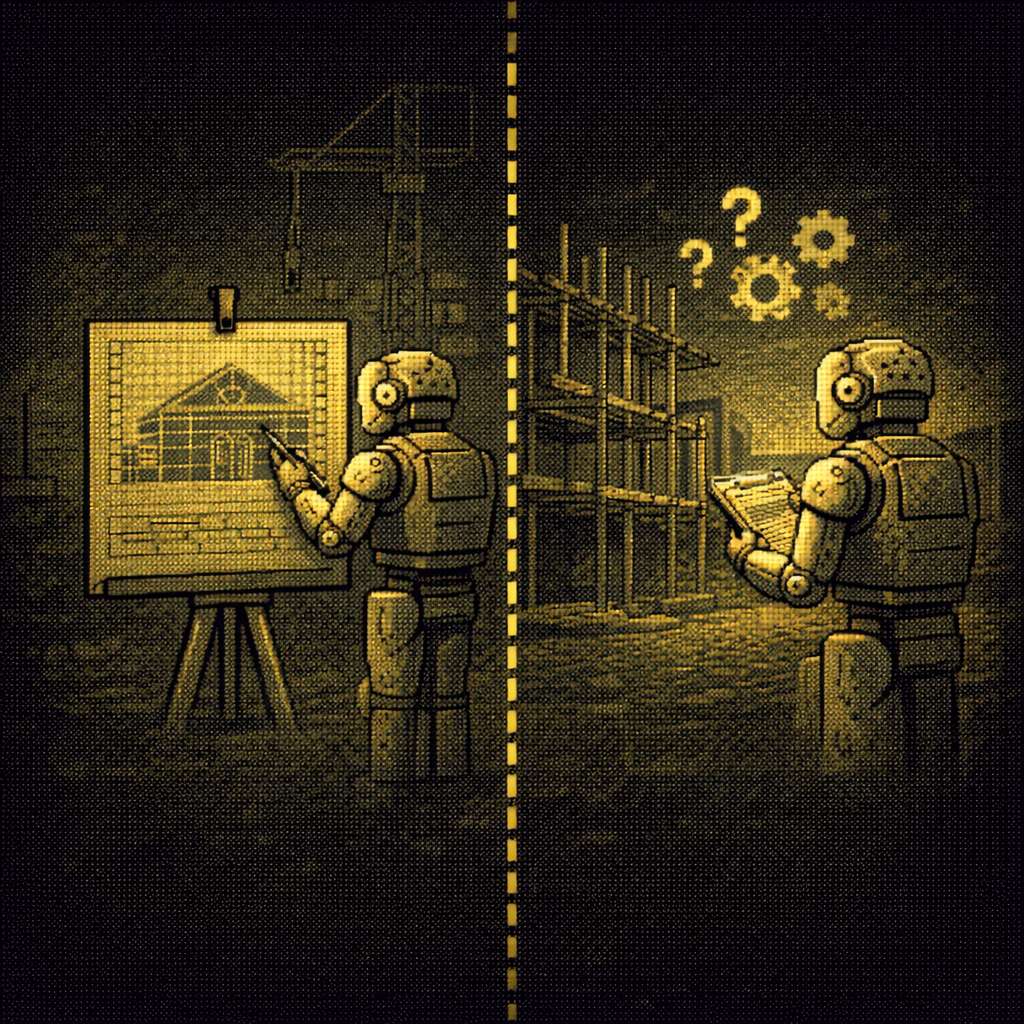
Builder with blueprints
- Knows exactly what to build
- Has resolved technical unknowns
- Executes a predetermined plan
- Specs are perfect for this
Architect discovering the design
- Still figuring out what the system wants to be
- Testing structural assumptions
- Iterating based on material constraints
- Specs are premature here
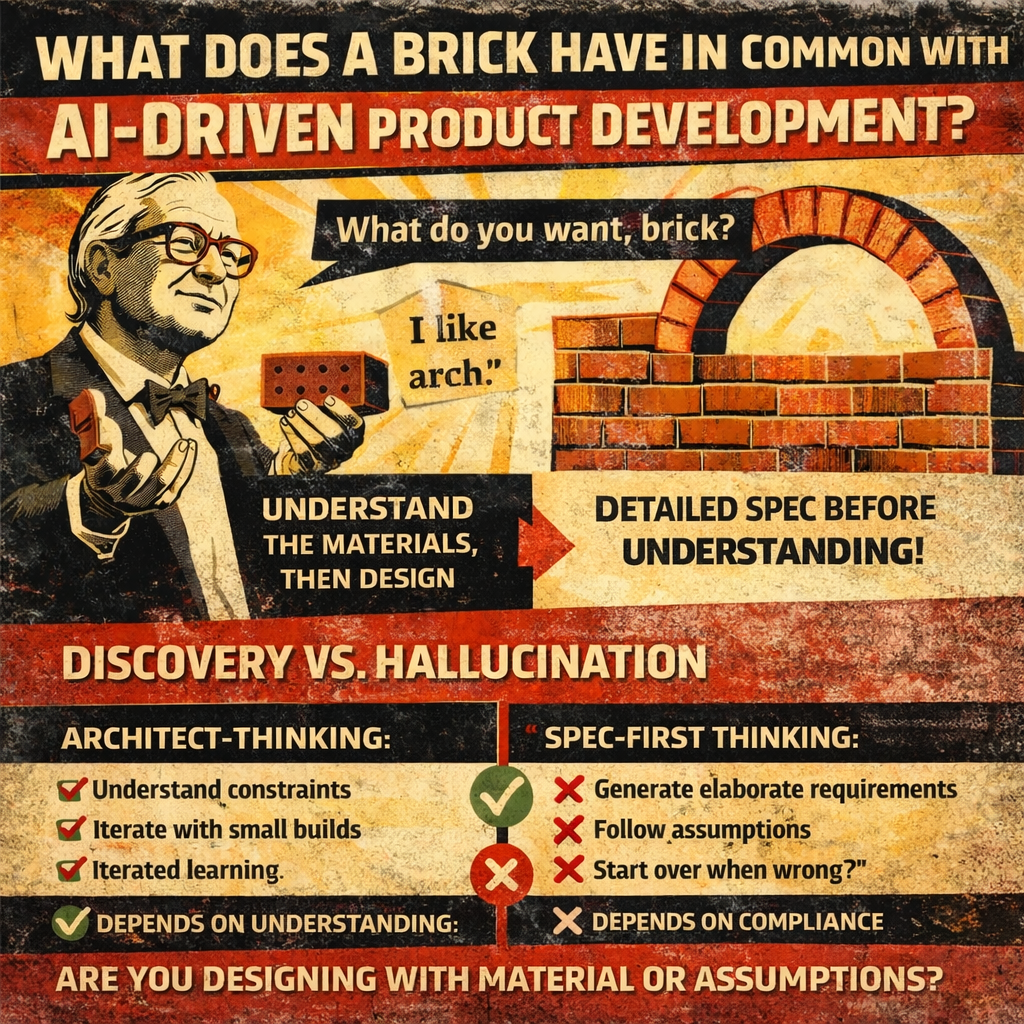
The problem with current AI tools is that they assume you’re a builder executing a plan.
But if you’re doing real product work - shaping features, discovering constraints, iterating on structure - you’re not executing. You’re designing.
And design doesn’t start with specs.
It starts with questions.
What the architect actually does
On a construction site, I used to spec things for builders because:
- They don’t know my project
- They’re not making structural decisions
- They need explicit dimensions and sequences
- The design is already resolved
But when I’m creating the project? That’s different.
That’s craft. That’s not mass production.
The craft process
- Ask questions of the material
- Build small to test assumptions
- Discover what works
- Refactor based on learning
- Document the emerged pattern, not the assumed pattern
Mass production
- Identical units
- Predefined specs
- Execute the plan
- No iteration
This is why spec-first AI feels like a straightjacket to me - real software development is craft. You’re discovering:
- What users actually need (not what they say they need)
- What constraints are actually binding (not what you assumed)
- What structure actually works (not what looked good in the plan)
The spec can’t precede that discovery. It doesn’t make sense. The spec is the output of design work, not the input.
Where I see the disconnect: many developers are used to receiving specs and implementing them. That’s a completely valid role. But it’s not product shaping.
If your process assumes “the spec is truth,” you optimize for compliance.
If your process assumes “reality teaches us,” you optimize for discovery.
With AI, this distinction becomes critical, and you need define if you’re using AI to:
- Generate plans for systems you haven’t built yet (builder mode)
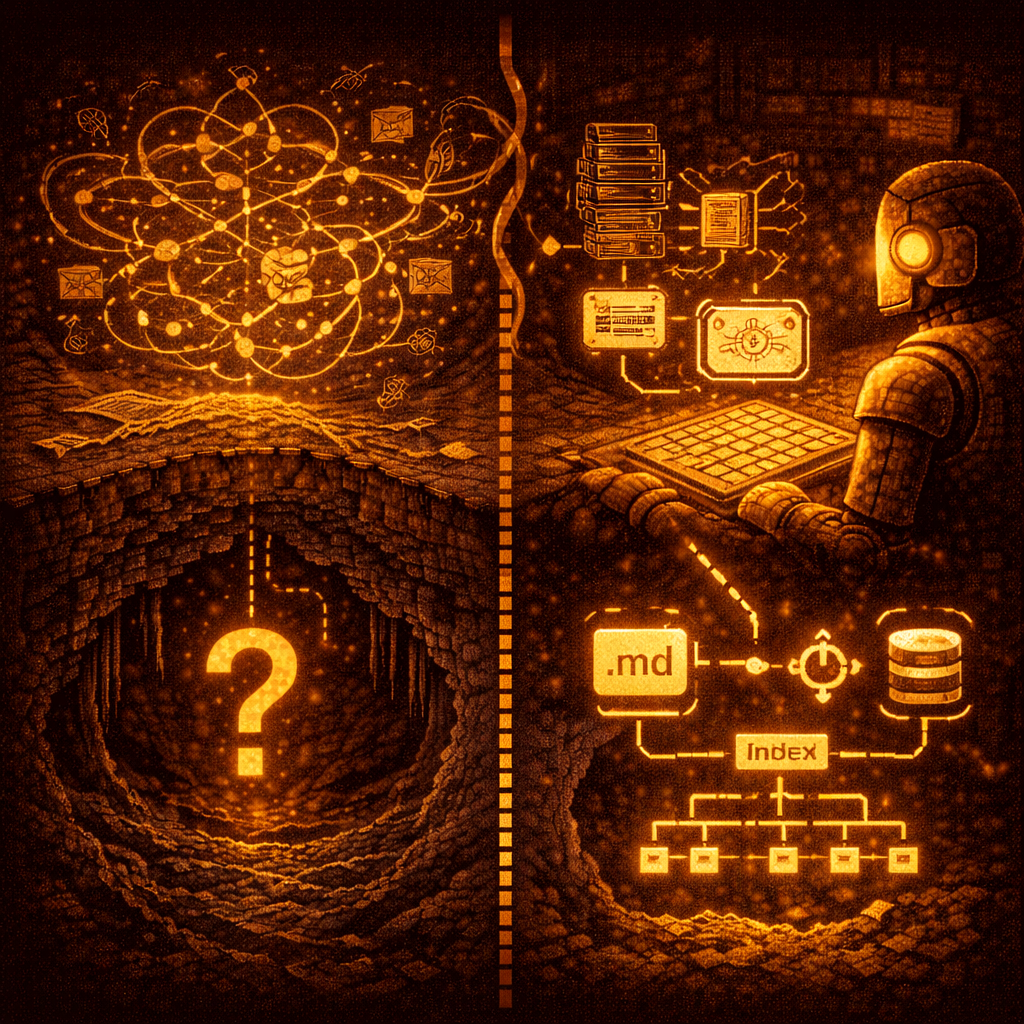
- Maintain memory of systems you’re actively discovering (architect mode)
Those require completely different workflows.
Next: Why “conversing with” vs. “consulting” an AI changes everything.