Product drift isn’t a strategy failure. It’s a coordination failure that looks like one.
-
 Moe Hachem
 - April 8, 2026
Product drift isn’t a strategy failure. It’s a coordination failure that looks like a strategy failure.
When a product ends up somewhere nobody intended, the post-mortem usually lands on strategy. The wrong market. The wrong positioning. A pivot that should have happened sooner. Leadership that couldn’t see what the users needed.
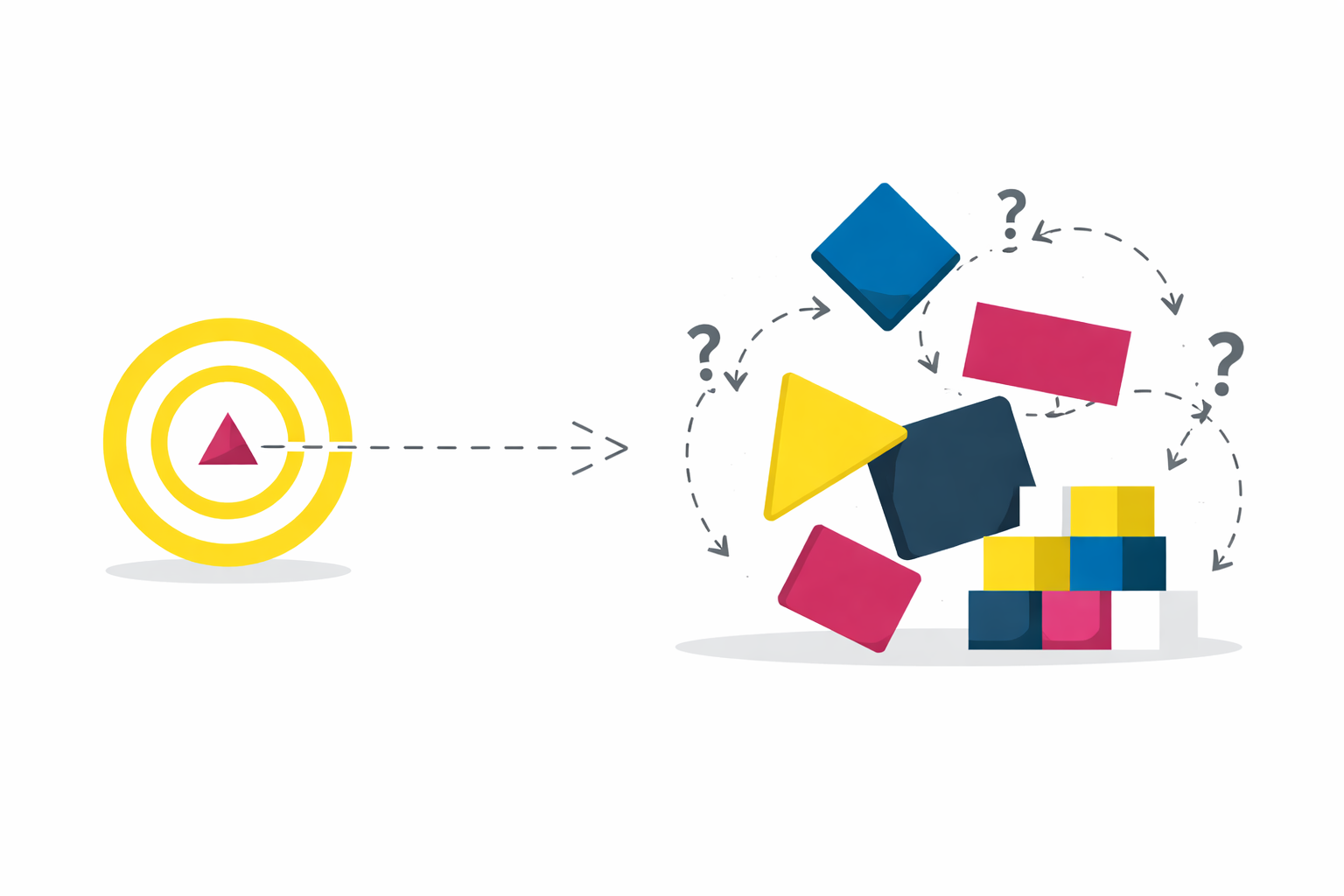
Sometimes that’s correct. More often, the strategy was fine and the execution diverged from it so gradually that nobody noticed until the gap was too wide to close without a major reset.
That’s not a strategy failure. That’s product drift — and it has a specific cause that strategy discussions never surface.
How drift actually accumulates
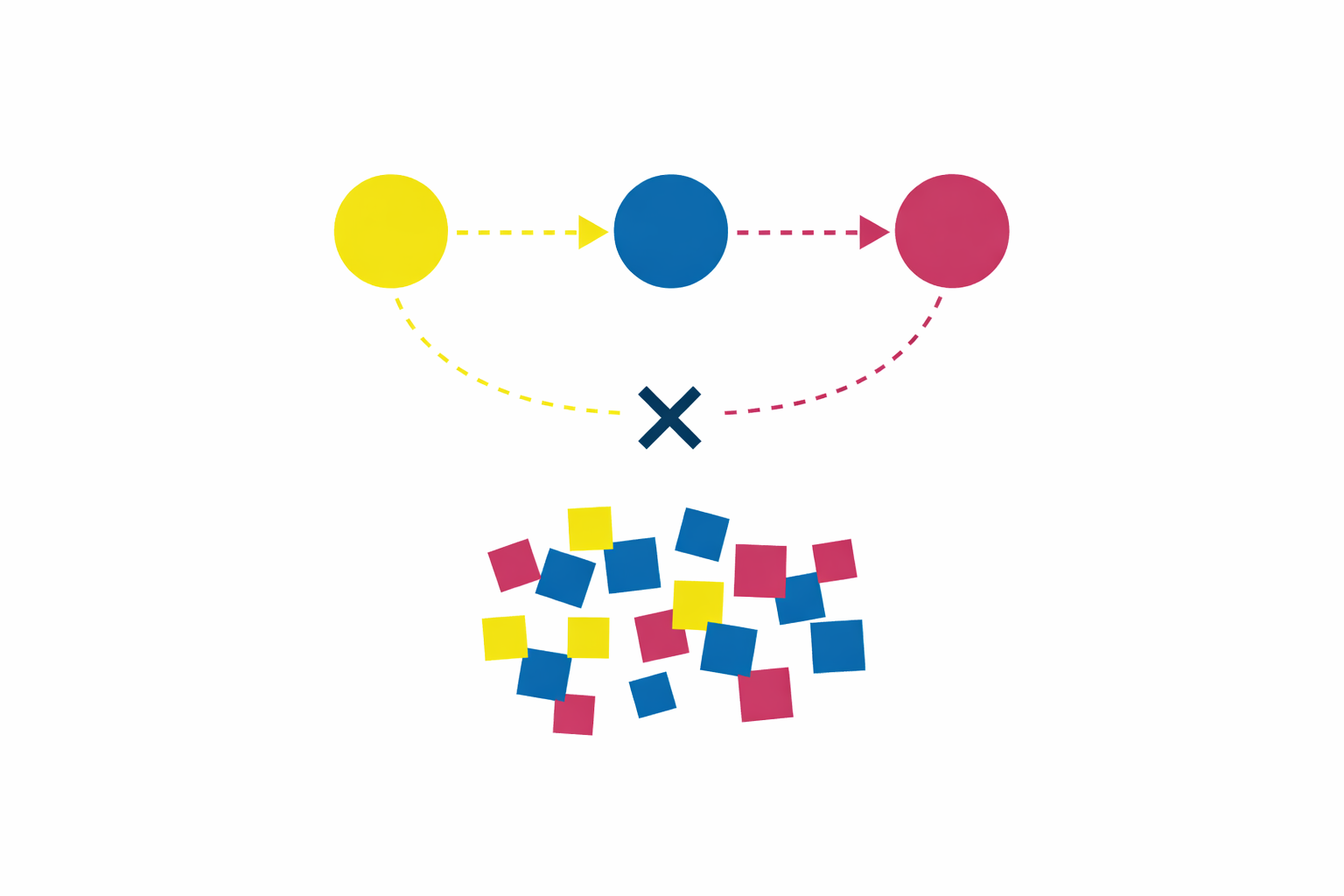
Product drift doesn’t happen in a single bad decision. It accumulates across dozens of individually reasonable ones.
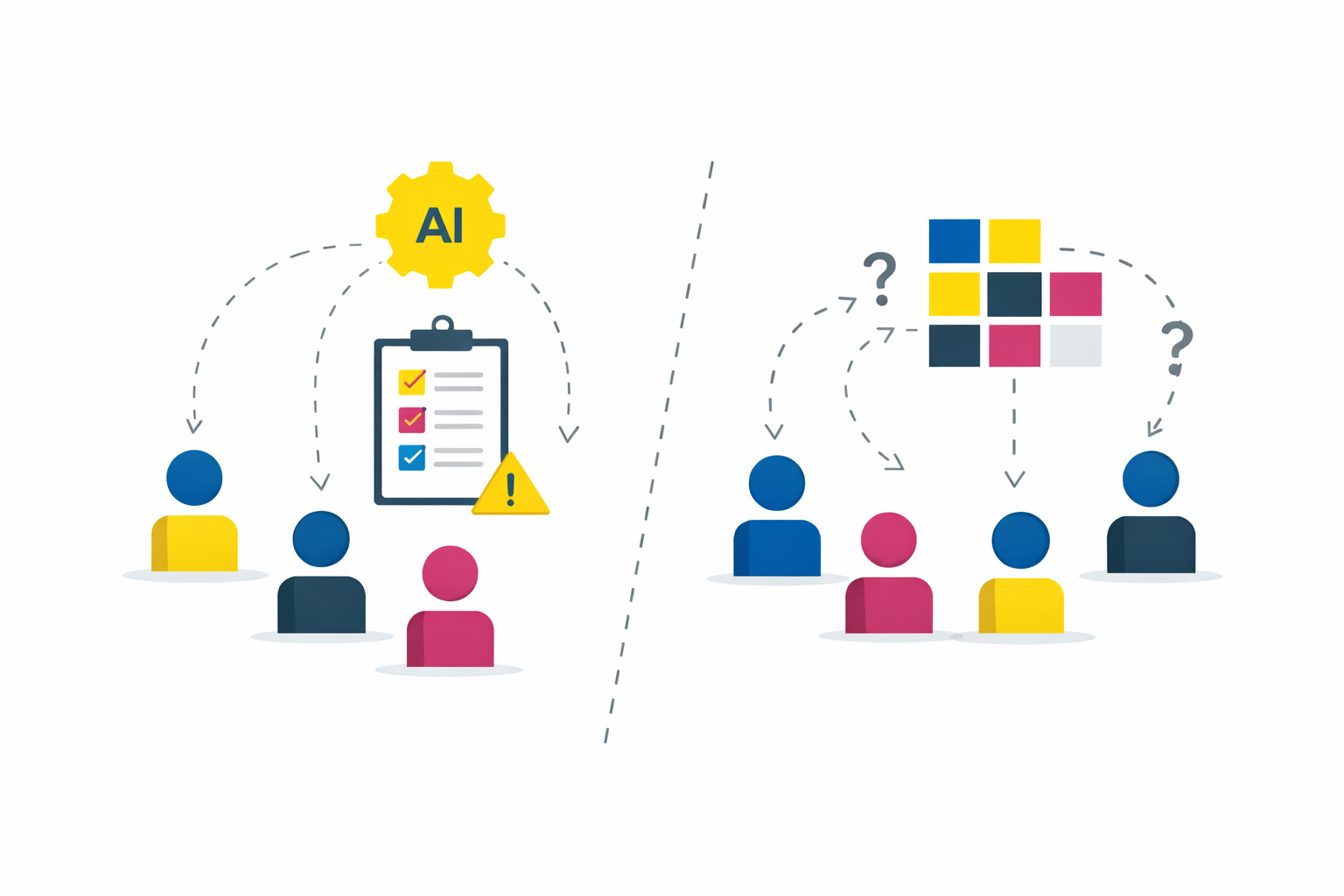
A feature gets scoped slightly differently than it was designed because the engineer building it didn’t have access to the reasoning behind the design. A UX decision gets overridden in implementation because the handoff didn’t capture the constraint that made the original decision necessary. A product principle gets reinterpreted differently by different team members because it was articulated once in a kickoff meeting and never documented in a form that travels.
Each of these is small. Each is defensible in isolation. Cumulatively, they produce a product that diverges from the original intent in ways that are hard to trace and harder to reverse.
By the time leadership notices that the product doesn’t quite match the vision, the decisions that caused the divergence are six months old, buried in tickets that were closed as “done,” and distributed across a team that no longer has clear memory of what the original intent was.
Why it gets misdiagnosed
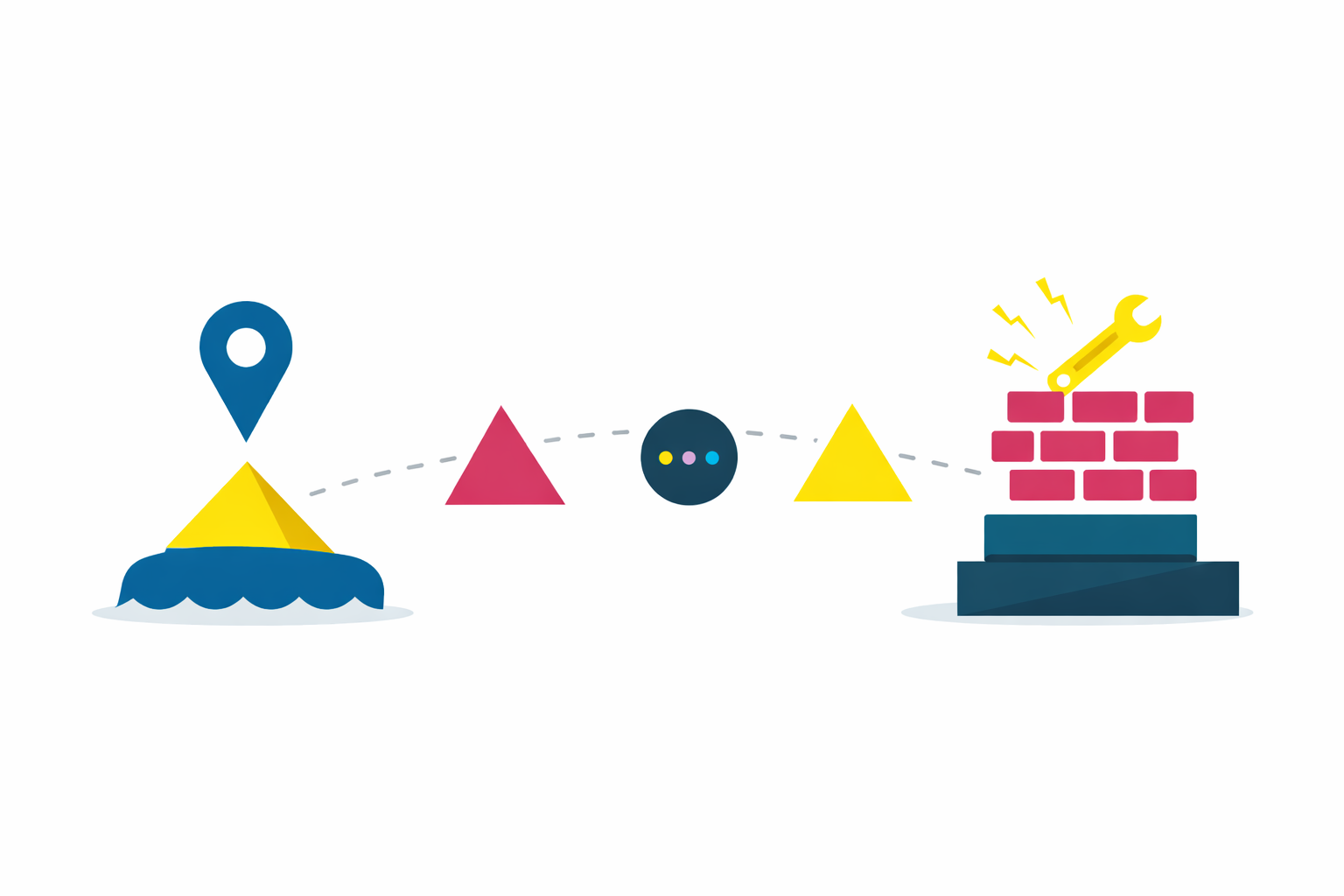
The misdiagnosis happens because drift is invisible at the decision level and only visible at the product level — and by the time it’s visible at the product level, there’s no clear line from the symptom back to the cause.
The symptoms look like strategy problems: the product feels unfocused, the value proposition is muddier than it should be, users are using it differently than expected, the roadmap feels like it’s always catching up to something. Leadership concludes the strategy needs to change.
Sometimes that’s right. But if the strategy was sound and the execution diverged from it, changing the strategy doesn’t fix the execution problem. It just starts the drift cycle again from a new starting point.
The diagnostic question
The question that separates strategy drift from coordination drift is this: can you trace the current state of the product back to documented decisions, or did it arrive through a sequence of undocumented adaptations?
If the product’s current form is the result of explicit, recorded strategic choices — even if those choices were wrong — you have a strategy problem. Change the strategy.
If the product’s current form is the result of accumulated undocumented micro-decisions that each seemed reasonable at the time, you have a coordination problem. The strategy may be fine. The system for ensuring execution reflects strategy is broken.
The fix for the second case is not a new strategy. It’s a coordination infrastructure that keeps execution and intent aligned in real time — not in quarterly reviews after the gap has already opened.
This is the first thing I look for in a Clarity Sprint. Not whether the strategy is right, but whether the system for executing it reliably exists.